Designing a kitchen can feel overwhelming. You want beauty and function, but where do you start?
Many resources throw endless photos at you but don’t actually guide you on how to choose the right layout for your home and lifestyle.
I know this struggle. As someone who has spent years in home design, I understand how important it is to have practical takeaways. This guide is built on experience, focusing on what works rather than fleeting trends.
This article will give you concrete kitchen design ideas. I’ll break down fundamental principles, common layouts, and actionable tips.
You’ll walk away with a clear understanding of how to transform your vision into reality.
Ready to confidently explore the best kitchen layout for your unique needs? Let’s dive in and make your dream kitchen happen.
The Foundation: Key Kitchen Layout Types Explained
Let’s talk One-Wall kitchens. This design is the best for small spaces and simplicity. Everything’s lined up on one wall, making it cost-effective and space-saving.
But here’s the catch: you sacrifice counter space and storage. Still, if you’re living in a studio or prefer open-plan living, it might just be your match.
Next up, the Galley kitchen. It’s a favorite among serious cooks. With its parallel workspaces, the workflow is optimized.
You can practically reach everything without moving much. But it can feel narrow, and seating? Forget it.
Now, the L-Shape layout. It’s versatile and works well in small to medium spaces. This design offers flexibility.
Great for incorporating dining areas. However, corners can be tricky to access. You might need some clever solutions there.
For those craving more space, the U-Shape kitchen is it. You’ll get maximum counter space and storage. This layout is perfect for multiple cooks and features the fast work triangle.
Yet, it requires a larger area and can feel enclosed.
Lastly, let’s introduce islands and peninsulas. They boost any layout by adding workspace, storage, and seating. What’s the difference?
An island’s freestanding, while a peninsula attaches to a wall. Want more on home essentials? Check this guide.
Mastering Flow: Kitchen Triangles and Zones
Ever heard of the Kitchen Work Triangle? It’s where magic happens. Imagine invisible lines connecting the sink, refrigerator, and stove.
This setup is genius for minimizing steps and boosting efficiency in the kitchen. You don’t want to feel like you’re running a marathon while cooking, do you?
Optimal triangle distances matter. Typically, you want each side of the triangle to be between four to nine feet. Less than that, and you’re packed like sardines.
More? You might as well join a gym.
But here’s a twist: the Kitchen Zone concept. Say goodbye to the single triangle and hello to multiple zones. Think prep, cooking, cleaning, storage, and serving areas.
It’s a modern take, especially handy in open-plan layouts which often feel chaotic.
Marrying the triangle with zone planning means smoother operations. An L-shaped kitchen? Naturally forms a triangle.
Throw in an island? Bam! You’ve got a prep zone.
For more inspiration, check out this detailed guide.
Pro tip: using both concepts can transform even the tiniest spaces. Everyone needs a little order. Who knew kitchen design ideas could make such a difference?
The Blueprint and Beyond: Crafting Your Kitchen’s Soul
When it comes to kitchen design ideas, measuring your available space is the first step. Grab a tape measure (and maybe a friend) to get those numbers right. You can’t ignore walls, windows, and doorways.
They’re like the stubborn siblings of your home. Always in the way. These fixed elements dictate layout possibilities, whether you like it or not.
Now, think about your lifestyle. Are you the solo chef type, or does your kitchen become a family circus during dinner prep? Maybe you’re the host with the most and need space for entertaining.
Do you need a dedicated baking station or a large pantry? Each choice here shapes your kitchen’s essence.
Budget is a big one. Different layouts bring different costs. Cabinets, countertops, appliances (they) all add up.
It’s key to prioritize based on your financial reality. Don’t let your dream kitchen become a financial nightmare.
And what about the future? Will your family grow, or do you plan to age in place? These factors influence long-term layout suitability.
Consider the flow with adjacent rooms. How does your kitchen connect to the dining area, living room, or even outdoor spaces? Open-plan designs offer a smooth vibe, but sometimes you need walls to hang art or hide messes.
Create a “wish list” versus a “must-have” list. This helps prioritize features within your chosen layout. It’s not just about today.
Your kitchen should grow with you. Remember, a great kitchen isn’t just built. It’s crafted.
Space Savvy Kitchens: Design Hacks Unveiled
When it comes to kitchen design ideas, small spaces don’t have to limit your creativity. The trick? Vertical storage. It’s a game changer.
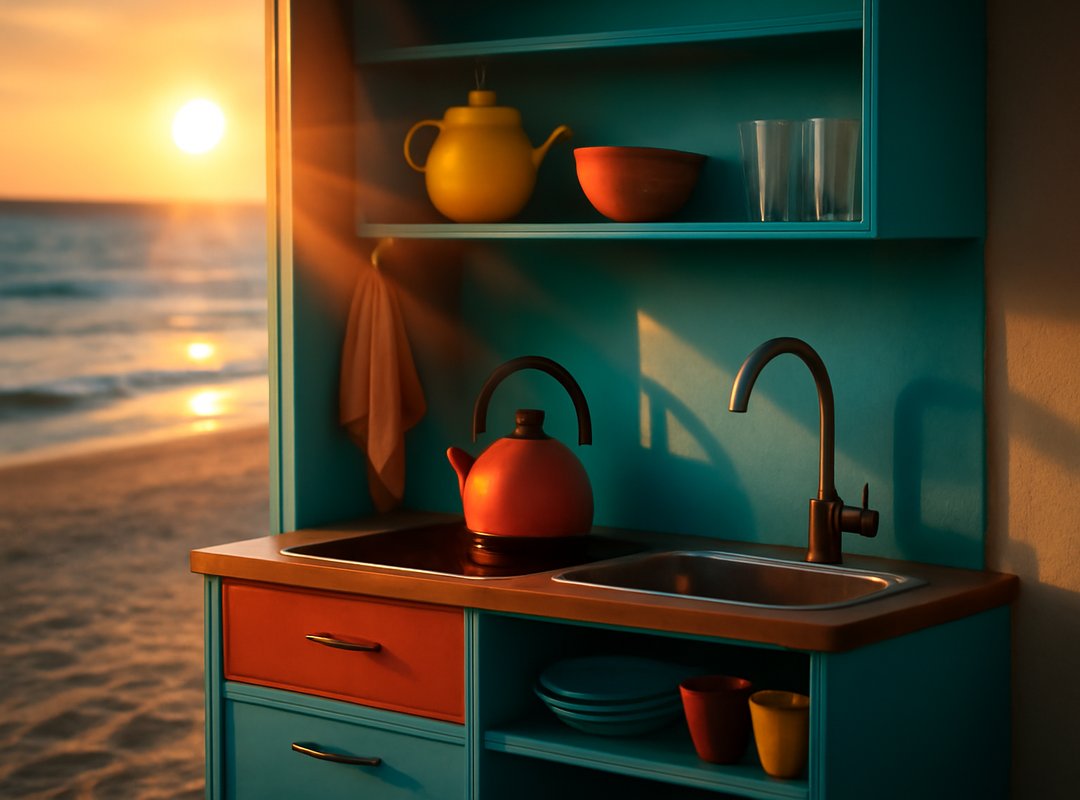
Shelves reaching the ceiling (even if you’re short like me) make a huge difference. For tiny kitchens, slimline appliances are a must. They pack the punch of full-sized versions without hogging space.
And lighter colors? They open up the room instantly, making it feel expansive. Add reflective surfaces like glass tiles, and you’ve got a winner.
Now, if you’re lucky enough to have a big kitchen, don’t let it go to waste. I swear by multiple work triangles. They increase efficiency by minimizing unnecessary steps.
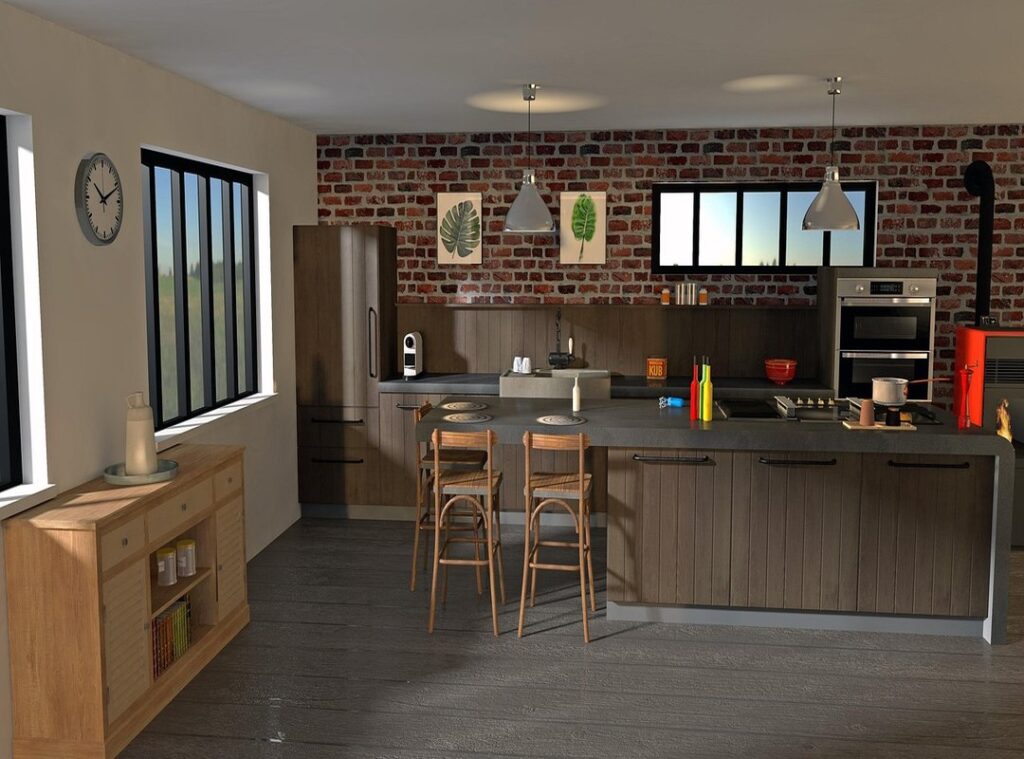
A dedicated baking or coffee bar can add a personal touch, too. And don’t just slap an island in the middle. Think about its positioning for prep and seating.
Storage solutions matter in any layout. Deep drawers make access easy. Corner carousels save those awkward spaces.
Vertical dividers keep your pans upright and organized. Appliance garages? They hide clutter and keep counters pristine.
Have you ever tried cooking in a cluttered kitchen? It’s chaos.
Lighting transforms kitchens. Ambient lights set the tone. Task lighting (like under-cabinet) helps during prep.
Accent lights, like pendants over an island, add flair. Material choices also play a role: durable countertops, easy-to-clean flooring, and appealing cabinet finishes. They affect both longevity and style.
Lastly, seating. Breakfast nooks and bar stools (at an island or peninsula) can be cozy yet functional. Built-in banquettes work wonders, offering seating without compromising flow.
Need more space tips? Check out this guide for ideas to maximize storage with minimal effort.
Beyond the Basics: Modern Trends and Smart Solutions
Open-concept kitchens are all the rage. They blend spaces, encouraging interaction (and let’s face it, who doesn’t want to chat while cooking?). But think about noise and clutter.
Not everyone wants the blender’s roar invading their living room.
Now, let’s talk about hidden kitchens. Perfect for small spaces, they vanish when you don’t need them. It’s like magic for minimalists.
And smart kitchens? Connect appliances and lights for convenience. Efficiency is key.
Don’t forget eco-friendly materials and energy-fast gadgets for a greener touch. Personalize these kitchen design ideas to suit your style. Make it truly yours.
Make Your Dream Kitchen a Reality
You now have a solid grasp of kitchen design ideas. The initial overwhelm of kitchen design has shifted to clarity.
By considering space, lifestyle, and functionality, you can nail down smart choices for your kitchen.
Now it’s time to take action. Sketch out your ideas, measure your space, and gather visual inspiration.
Feeling stuck? Consult a design professional to refine your vision.
Create a kitchen that’s not just functional but a true reflection of your home and lifestyle.
Let’s turn your ideas into reality. Start today and build the kitchen you’ve always dreamed of.
 Home Systems & Maintenance Solutions Specialist
Fynovox Wren works as a home systems and maintenance solutions specialist at Xhasrloranit, focusing on practical repair methods, maintenance efficiency, and smart troubleshooting systems. His expertise lies in simplifying technical household challenges into clear, easy-to-follow solutions that help users manage their homes more effectively. He develops guides and strategies that improve home maintenance routines while integrating smart home technologies into everyday use. Fynovox emphasizes durability, cost-efficiency, and long-term sustainability in household management, ensuring that users gain practical and reliable knowledge for real-world home improvement and upkeep.
Home Systems & Maintenance Solutions Specialist
Fynovox Wren works as a home systems and maintenance solutions specialist at Xhasrloranit, focusing on practical repair methods, maintenance efficiency, and smart troubleshooting systems. His expertise lies in simplifying technical household challenges into clear, easy-to-follow solutions that help users manage their homes more effectively. He develops guides and strategies that improve home maintenance routines while integrating smart home technologies into everyday use. Fynovox emphasizes durability, cost-efficiency, and long-term sustainability in household management, ensuring that users gain practical and reliable knowledge for real-world home improvement and upkeep.